Your grocery cart doesn’t need a guilt trip
A busy parent’s guide to looking past the front of the package, understanding added sugars, and making one useful choice at a time.
Illustrative story: Sam and his child are fictional, not customer testimonials.
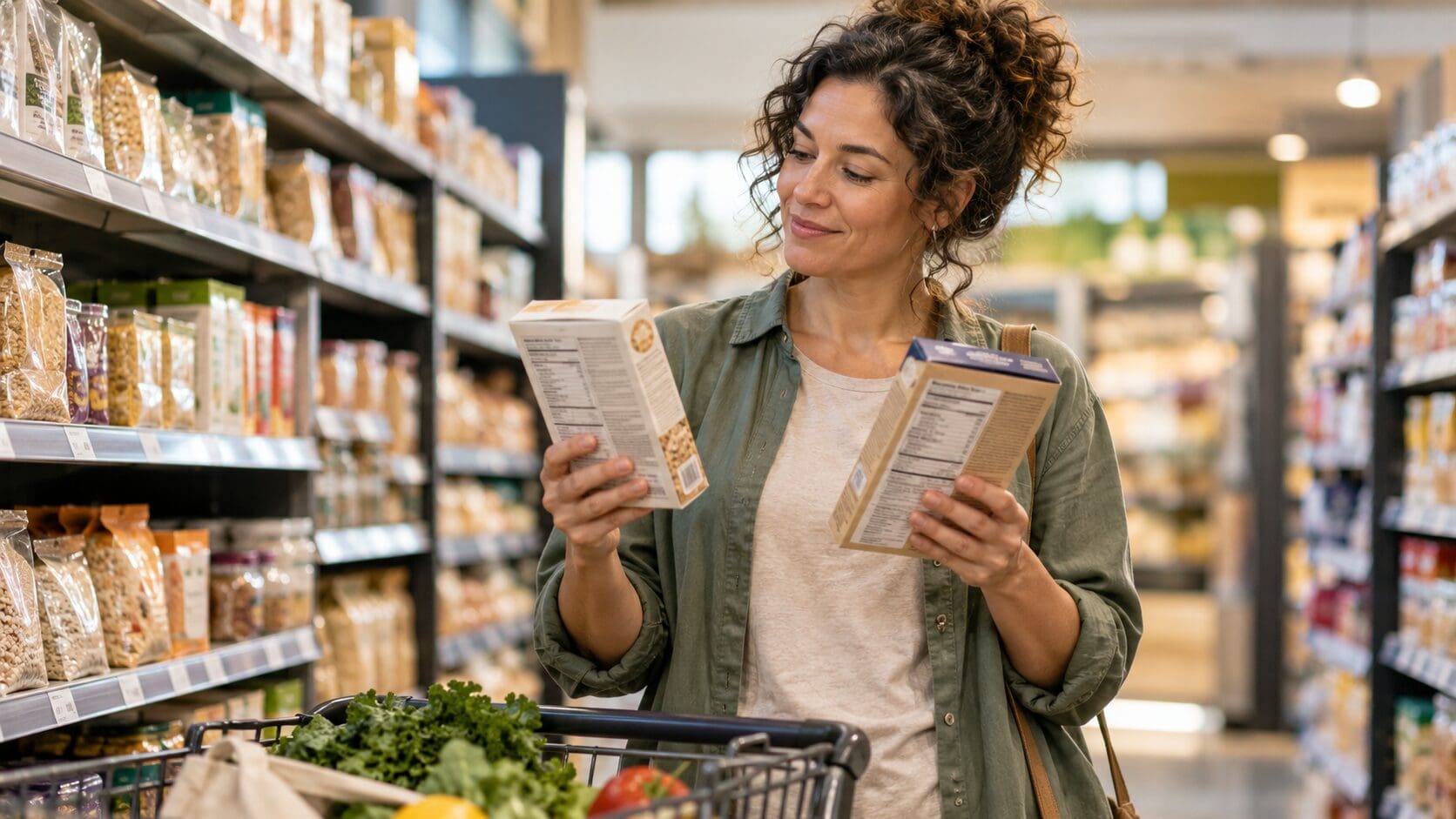
Sam had a shopping list, twenty minutes, and a child who had fallen in love with a cartoon pirate on a cereal box.
The pirate looked trustworthy. He had a spoon and excellent dental work. The box beside him promised a wholesome start. Another announced what it did not contain. Sam turned three boxes around, checked the clock, and wondered when breakfast had become a research assignment.
Sound familiar? Food shopping can involve plenty of persuasion before you ever reach the Nutrition Facts panel.
Why this is in the news
In its 2026 Human Foods Program agenda, announced January 23, the FDA set out plans for an added-sugar reduction strategy. It also said it would work with the Federal Trade Commission to explore potential industry guidelines and other ways to limit direct marketing of certain foods to children. These are stated priorities and potential guidelines, not a blanket food ban. Read the FDA’s agenda. (https://www.fda.gov/about-fda/human-foods-program/human-foods-program-2026-priority-deliverables)
For the person steering the cart, the useful question is simpler: what can I learn from this package before I buy it?
Try these four small moves
1. Start with the serving size.
Before comparing two products, check whether their nutrition numbers describe similar amounts. A smaller serving can make a number look smaller without answering what you would actually eat. The FDA also explains that a serving size reflects an amount typically consumed; it is not a recommendation for how much you should eat. See the FDA’s label guide. (https://www.fda.gov/food/nutrition-facts-label/how-understand-and-use-nutrition-facts-label)
2. Find the added-sugars line.
Total sugars include both naturally occurring sugars and added sugars. The added-sugars entry helps you distinguish the latter. Look at it alongside the rest of the label, rather than making one number the entire verdict. Compare fiber and sodium too, and consider how the food fits the meal. The FDA explains added sugars here. (https://www.fda.gov/food/nutrition-facts-label/added-sugars-nutrition-facts-label)
Sam did not deliver a lecture in the cereal aisle. He compared two options, checked their serving sizes, and chose one that worked for the family.
3. Let the front make its pitch, then read the details.
A cheerful character or an appealing phrase can catch your attention. The ingredient list, Nutrition Facts, allergen information, and preparation instructions answer different questions. Use them together. You do not have to investigate the whole store; start with one product you buy regularly.
4. Remember to plan something for yourself.
Parents need food plans too. Choose something you will actually use on a busy day, whether that is leftovers, a familiar breakfast, or a smoothie alongside other food. For your own adult routine, That Green Juice is one frozen whole-food smoothie option. Review its ingredients, storage directions, and safety information rather than choosing it on the brand name alone. The same thoughtful shopping standard applies to our products.
At checkout, Sam’s cart still contained convenient food, a snack his child enjoyed, and something for dinner. It had not become a perfect-cart exhibit. He had simply compared a familiar purchase with a little more information.
The cartoon pirate stayed behind. No hard feelings. His nutrition credentials had been difficult to verify.
Want to explore a smoothie for your own routine? Shop the That Green Juice Mixed 6-Bottle Pack. (https://thatgreenjuice.com/product/that-green-juice-mixed-6-bottle-pack/)
Product note: The current Original product page carries an unpasteurized-product warning, including particular risk for children, older adults, and people with weakened immune systems. Review the current product safety information before ordering. This article does not recommend TGJ for children.